A Fishing Guide to Catching Flounder in Ocean City, Maryland
Flounder fishing is one of the most popular inshore fishing opportunities along the Mid-Atlantic coast, and few places offer it as consistently as Ocean City, Maryland. With productive back bays, deep channels, and an inlet connecting directly to the Atlantic Ocean, the area provides ideal habitat for summer flounder (often called “fluke” or "flatties").
Whether you’re fishing from a boat, kayak, or a public pier, this guide will walk you through where to fish, what gear to use, and the best techniques for catching flounder around Ocean City.
Understanding Flounder Behavior
Flounder are bottom-dwelling ambush predators. They lie buried in sand or mud with only their eyes visible, waiting for baitfish or shrimp to swim by. Because of this behavior, the key to catching flounder is keeping your bait near the bottom and moving naturally with the current.
They often position themselves in areas where water movement brings food to them, such as:
Channel edges
Inlet currents
Bridge pilings
Drop-offs in the bay
Flounder are known for their subtle bite. Often they will grab a bait and hold it before swallowing, which is why patience is important when setting the hook.
Best Time of Year to Catch Flounder
Flounder migrate into the coastal bays each spring as the water warms after spending the winter in 200+ feet of water where they spawn.
Typical season around Ocean City:
April – May: First flounder arrive in the bays
June – August: Peak numbers and consistent fishing
September – October: Fewer fish, but often larger ones
Water temperatures between 60°F and 75°F usually produce the best bite.
Best Places to Catch Flounder
Several areas around Ocean City consistently produce flounder.
1. Ocean City Inlet
Ocean City Inlet
This is one of the most reliable spots. The strong tidal current pulls baitfish through the inlet, attracting flounder that wait along the bottom.
Best spots include:
Along the rock jetties
The channel edges
Fish here during moving tides.
2. Route 50 Bridge
Harry W. Kelley Memorial Bridge
The bridge pilings create structure and current breaks that hold flounder.
Tips:
Drift along the pilings
Use heavier jigs to stay on the bottom
Fish during slack to moderate current
3. Back Bay Channels
Isle of Wight Bay
The channels in the back bay are excellent for drifting.
Look for:
Drop-offs from shallow flats
Edges of marked channels
Areas with baitfish on fish finders
This area is ideal for small boats and kayaks.
4. Public Piers and Shoreline
Good access points include:
Oceanic Fishing Pier
2nd to 4th Street Bulkhead
9th Street Fishing Pier
These spots allow anglers without boats to target flounder effectively.
Best Gear for Flounder Fishing
Flounder don’t require heavy tackle, but sensitive gear helps detect subtle bites.
Rod
6’6” to 7’ medium-light spinning rod
Reel
2500–4000 size spinning reel
Line
10–20 lb braided line
Leader
15–25 lb fluorocarbon
Braided line is preferred because it allows anglers to feel the light bite of flounder on the bottom.
Best Rigs for Flounder
Bucktail Jig
One of the most popular rigs in Ocean City.
Setup:
3/4–2 oz bucktail
Tipped with a Gulp Mullet, Grub or squid strip
Fish it by slowly bouncing it along the bottom.
Flounder Hi-Low Rig
A classic bait rig.
Typical setup includes:
Two hooks on short droppers
Sinkers from 1/2–3 oz
Bait such as minnows or squid
This rig works especially well for beginners.
Jig and Teaser Combo
Many experienced anglers use:
Bucktail jig on the bottom
Small teaser hook above it
This presents two baits at different heights, increasing hookups.
Best Baits
Flounder feed primarily on small fish and crustaceans.
Top baits include:
Live minnows (killifish/mummichogs)
Finger mullet
Squid strips
Frozen Shiners
Gulp swimming mullet
Many anglers combine live bait with artificial lures for added scent and action.
Best Tides and Times
Timing can dramatically improve success.
Best conditions:
Moving tide (incoming or outgoing)
Early morning or evening
Overcast days with moderate current
Outgoing tides are often best because they pull bait from marshes into deeper channels where flounder wait.
Pro Tips
Drift slowly. Ideal drift speed is around 0.5–1 mph.
Stay on the bottom. If you’re not occasionally touching bottom, increase sinker weight.
Wait before setting the hook. Flounder often grab the bait first.
Fish structure. Bridge pilings, rock jetties, and channel edges are key.
Cover water. Drifting helps locate active fish.
Final Thoughts
Flounder fishing in Ocean City is both accessible and rewarding. With productive bays, strong tidal currents, and plenty of public access points, anglers of all skill levels can find success.
Focus on fishing near the bottom, around moving water, and with natural bait, and you’ll greatly increase your chances of landing one of these prized flatfish.
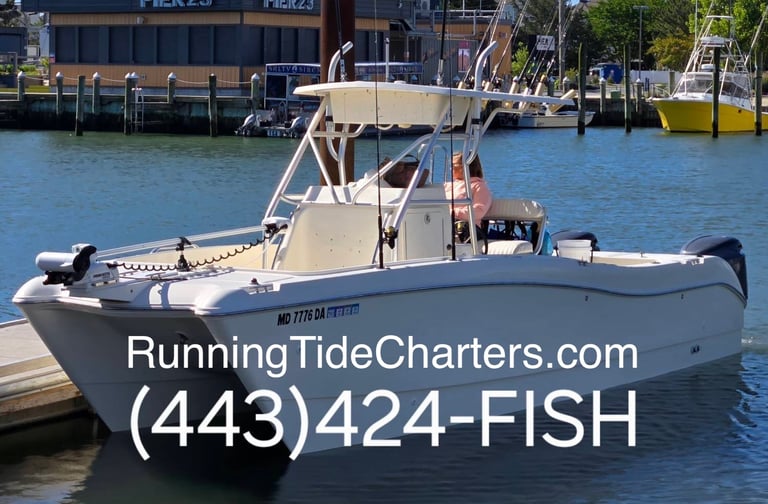
If you would prefer to have someone guide you in fishing Ocean City's bays please get in touch with me at Running Tide Charters.
I hope you enjoyed this guide and find this helpful in locating your personal best flounder,
Tight Lines,
Captain Vince
Running Tide Charters
Start your Adventure:
© 2024. All rights reserved.
Phone:
Email: